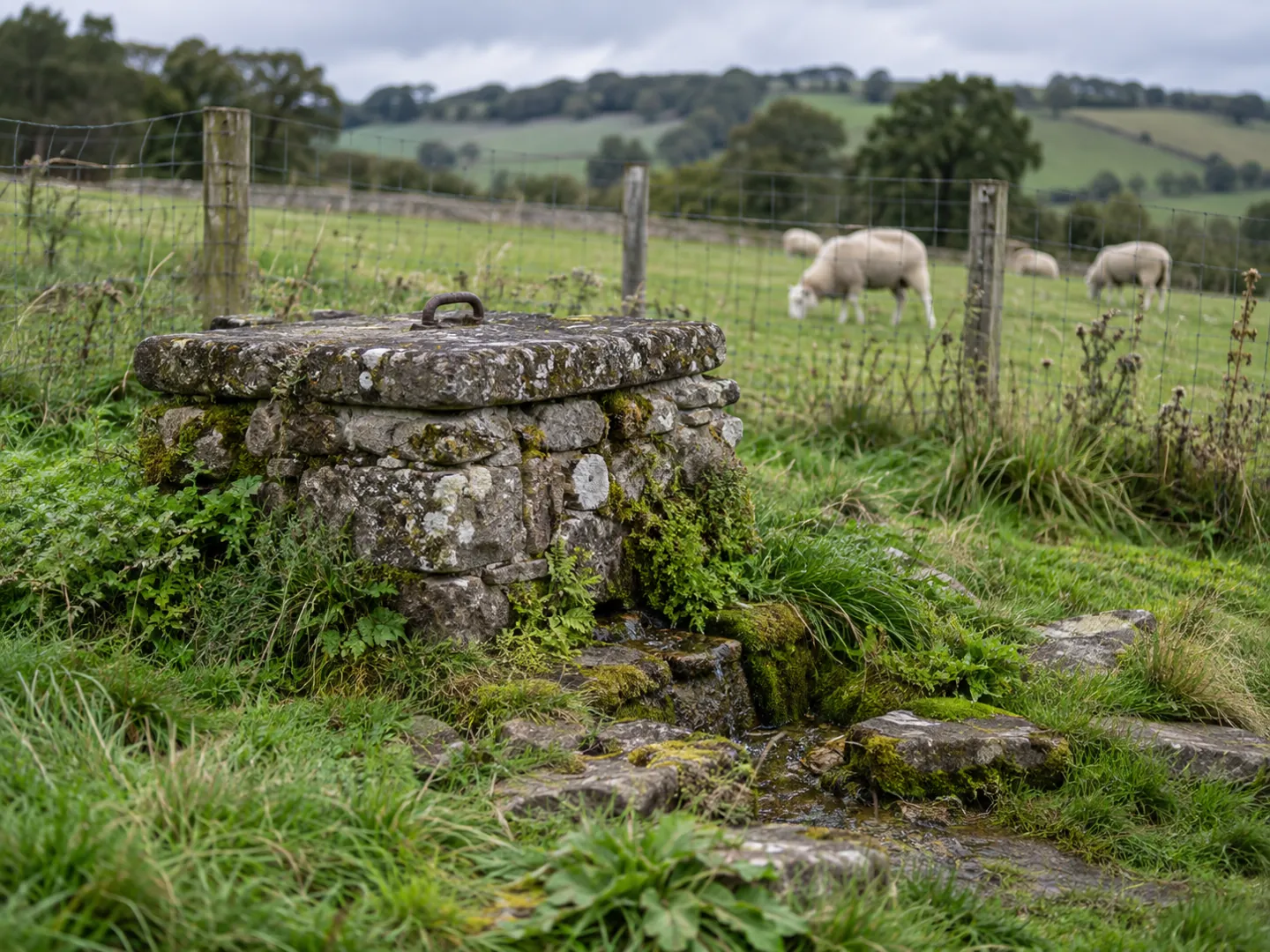
Around 33,000 private supplies in England draw on boreholes, springs, wells and streams. The same water standards apply as for the mains, but looking after the source falls to the people who own and use it.
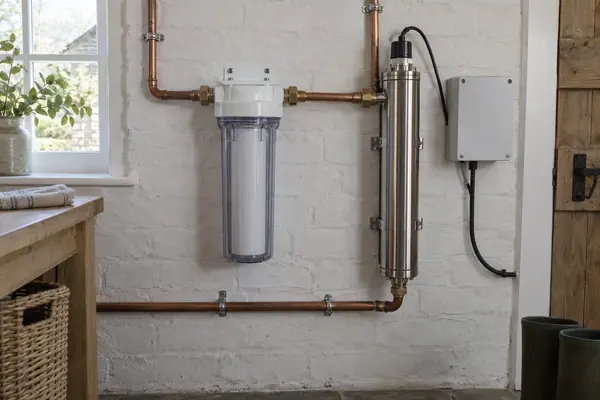
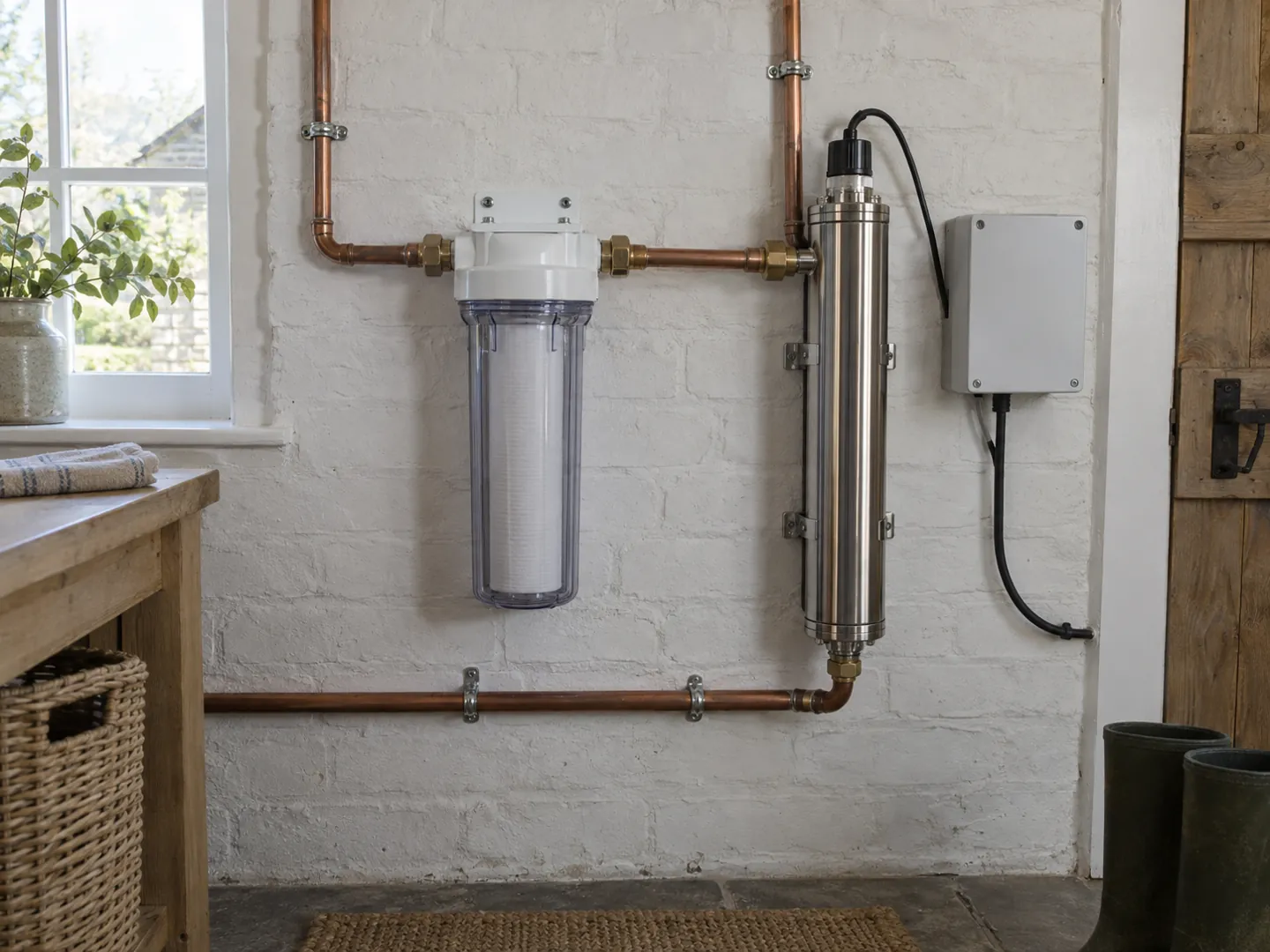
Use UV disinfection designed for drinking water, pre-treat to clear cloudiness, and replace filters and lamps as the maker instructs. Keep a spare UV bulb.
Pick the kind of private supply you have to see how often the council must look at it. The bar shows how much regular checking the rules require.
Based on the Private Water Supplies (England) Regulations 2016 as described by East Devon District Council and the DWI. Fees and details vary by council.
TWO NUMBERS WORTH KNOWING
Private water needs watching.
Two findings from the Drinking Water Inspectorate's report on private supplies in England in 2024.
4.46%
Private supply samples with E. coli
E. coli was found in 560 of 12,559 private supply samples in 2024. The DWI gives the rate for public mains water as about 0.02%.
E. COLI · DWI 2024
39%
In-scope supplies with an up-to-date assessment
Only 5,143 supplies had an up-to-date risk assessment in 2024, although each qualifying supply should be assessed at least every five years.
RISK ASSESSMENTS · DWI 2024
In 2024 England had 33,133 private supplies serving about 849,800 people, roughly 1.47% of the population. Overall, 2.50% of tests failed one or more standards.
FOUR CHECKS FOR OWNERS
Small jobs, safer water.
These come from the DWI's advice on protecting a private supply. Most are about stopping surface water, animals and waste reaching the source.
Walk the 50 metres
Keep manure out of a 50 metre radius and store any fuel or oil nearby in bunded containers.
Check the head and covers
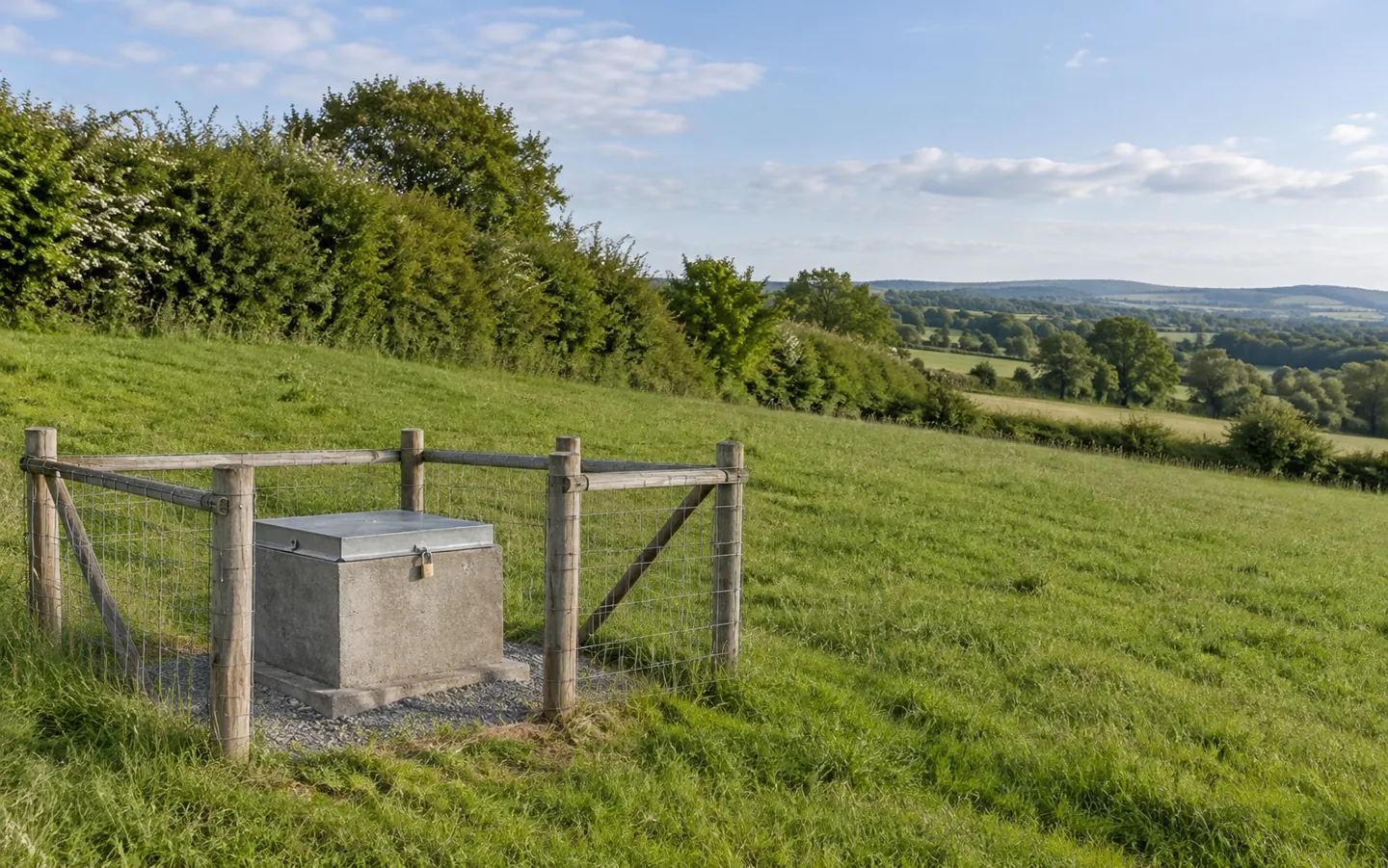
Headworks raised at least 0.5 m, animal-proof covers on tanks and chambers, and banks or ditches to turn surface water away.
Service the treatment
Change filters and UV lamps on the maker's schedule, and consider alarms for cloudy water or loss of power.
Ask the council
Your council's environmental health team regulates private supplies and can sample the water or assess the risk.
AI-generated image, not a photograph of a real person or place.AI-generated image, not a photograph of a real person or place.
DIGGING A NEW ONE
Before you drill.
In England, groundwater from boreholes, wells and springs is regulated by the Environment Agency. You are likely to need an abstraction licence if you take more than 20 cubic metres, or 20,000 litres, a day.
Before building a well or borehole you plan to abstract from, check whether you need consent to investigate a groundwater source. The DWI also advises that abandoned wells and boreholes are covered, backfilled or sealed so surface water cannot reach the aquifer.
Questions
Questions people ask
How many people in England use a private water supply?
The DWI says England had 33,133 private supplies in 2024, serving about 849,800 people, around 1.47% of the population. Most are in rural areas.
Who is responsible for a private supply?
Owners, users and controllers manage the supply. Local authorities regulate it, keep records, carry out risk assessments and must serve a notice where a supply is a potential danger to health.
How often is a private supply tested?
It depends on its size. A single home needs no routine monitoring but can ask for sampling. Small supplies are checked at least every five years, and large or commercial supplies more often.
How far should animals and manure be from a well?
The DWI advises not storing or spreading manure within 50 metres of the source, and keeping livestock away, which may mean up to 50 metres depending on the ground.
Do I need a licence for my borehole?
The Environment Agency says you are likely to need one if you take more than 20 cubic metres a day. You may also need consent before constructing a well or borehole.